
Why Your Restaurant's Tableware Is Part of the Dish (And How to Get It Right)
RESTAURANT OPERATIONS & TABLE SETTING — PRACTICAL GUIDES
Diego Acevedo
6/8/20263 min read
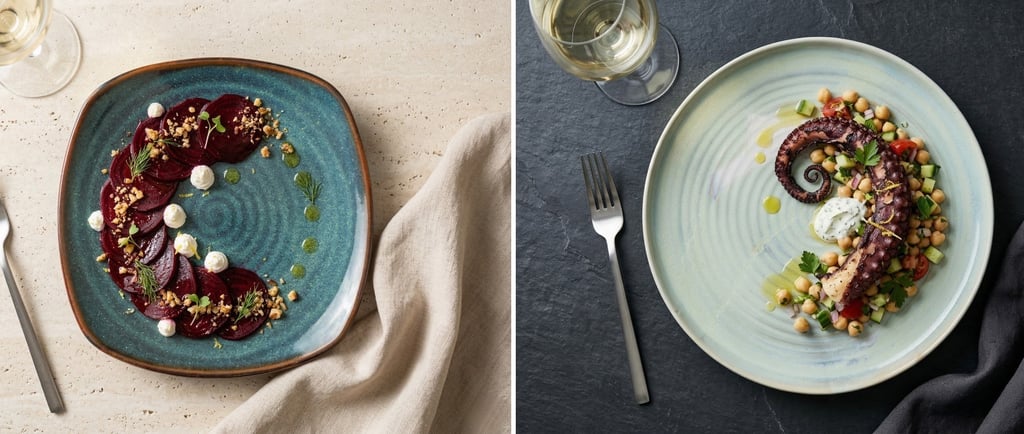
The round plate has dominated restaurant service for centuries. It is the default, the assumption, the shape that appears in every catering catalogue, every culinary school diagram, every stock image of a restaurant table. But in the last decade, square plates have moved from novelty to standard consideration in serious restaurant kitchens — and the question of which shape works better has become both more nuanced and more commercially significant.
This guide addresses the practical question without sentiment. Round and square plates are different tools. Understanding which tool suits which job will improve your table and your kitchen.
The Case for Round
Round plates have endured because they are extraordinarily good at their job. The circular form has no directional bias — there is no 'top' or 'bottom' of a round plate, which means plating orientation is flexible and the chef retains total compositional control. Guests cannot hold a round plate incorrectly; there is no wrong edge to face them.
For tasting menus with multiple courses, round plates maintain visual rhythm and consistency across the meal. For traditional European cuisine where sauces are swept, dots are placed, and proteins are positioned centrally, the round plate provides a canvas that has been refined over generations of culinary practice.
The practical operational advantage: round plates stack cleanly, transport uniformly, and occupy dishwasher racks efficiently. In a high-volume kitchen, this operational predictability has genuine value.
The Case for Square
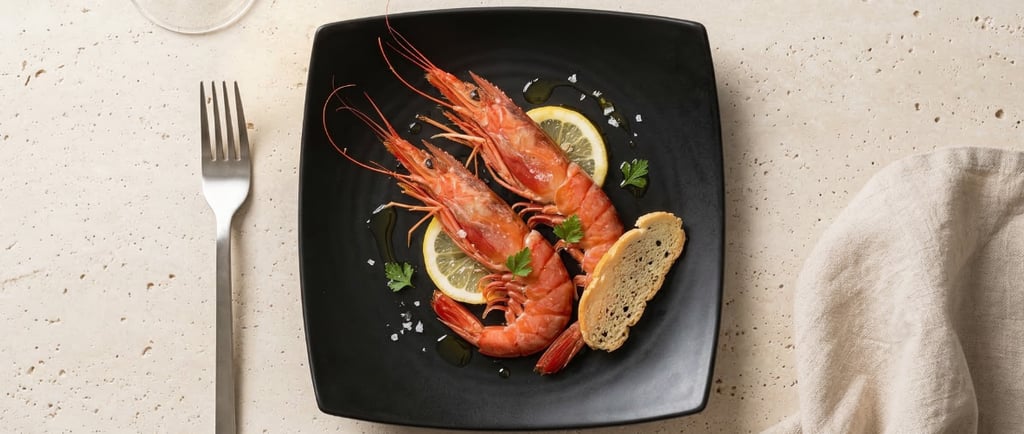
Square plates change the compositional rules. The hard right-angle corners create a natural framing effect that draws the eye inward — toward the food — in a way that the continuous curve of a round plate does not. For linear or architectural plating, where components are placed in a deliberate horizontal or diagonal arrangement, the square plate provides reference lines that the chef can use rather than work against.
Square plates also read as more contemporary in many dining contexts. They signal a deliberate aesthetic decision — that the restaurant has thought about its tableware rather than defaulted to convention. For concepts where the visual statement of the table setting is a differentiator, this matters.
Our Square selection at Annamis includes nine collections — more than any other selection — because we found that the demand from chef-led restaurants for square forms across a range of glaze palettes and textures is consistently high. The geometric precision of square plates provides a canvas that rewards precise, confident plating.
Mixing Shapes: The Designer's Approach
The most interesting tableware decisions in contemporary fine dining are not either/or. They are about deliberate mixing: a round charger plate with a square side plate, a triangular amuse-bouche vessel alongside a circular soup bowl. The visual rhythm created by moving between forms across a meal's course progression is one of the most underused tools in restaurant design.
The practical constraint: mixing requires a clear system, not improvisation. Mixing shapes from the same Annamis selection — or across selections that share a glaze family — maintains cohesion. Mixing shapes from entirely different visual traditions creates confusion rather than interest.
The Practical Verdict
For the core of your table setting — dinner plates, main course service — round plates remain the most operationally flexible choice. For side plates, amuse-bouche vessels, accent pieces, and tasting course presentations, square forms offer compositional advantages that reward confident plating.
The most defensible approach: a round foundation with square accents. Build your core operational stock in round forms from a collection you can replenish reliably, and introduce square pieces as deliberate accent elements that elevate specific course presentations.
FAQ
Q: Do square plates take up more space in service?
A: Square plates of the same stated diameter as round plates typically have a larger actual footprint — the corners extend beyond the circle that a round plate of the same diameter occupies. Factor this into your cover spacing calculations.
Q: Are square plates harder to clean in commercial dishwashers?
A: Not significantly. The corners can accumulate food residue if pieces are racked too tightly. Allow slightly more clearance between square pieces in dishwasher racks.
Q: Can I mix Annamis Circle and Square selections in one table setting?
A: Yes, and we encourage thoughtful mixing. Our Circle and Square selections share glaze families that allow them to sit together with visual coherence. We can advise on specific combinations for your concept.
Q: What cuisine styles suit square plates best?
A: Contemporary European tasting menus, Japanese-influenced concepts, and any cuisine where linear or architectural plating is part of the presentation language benefit most from square forms.
→ Request your sample set at annamis.com/for-restaurants
Terms & Conditions
Privacy Policy


© 2024 ANNAMIS LTD. UK Company Number 15690972
9-11 New Broadway, London, W5 5AW, UK.
© 2025 DAC GLOBAL SZOO. PL. NIP 5342704617.
Gruntowa 3a, Wolica, Poland, 05-830.
All rights reserved.
Site created using Hostinger.com
Telephone: +44 7858221374 / +48 739440679
Email: info@annamis.com
United Kingdom - European Union - Vietnam