
Why Fine Dining Restaurants Are Rethinking Their Tableware Supply Chain
SUSTAINABILITY & VALUES — ZERO WASTE ANGLE
Diego Acevedo
4/30/20264 min read
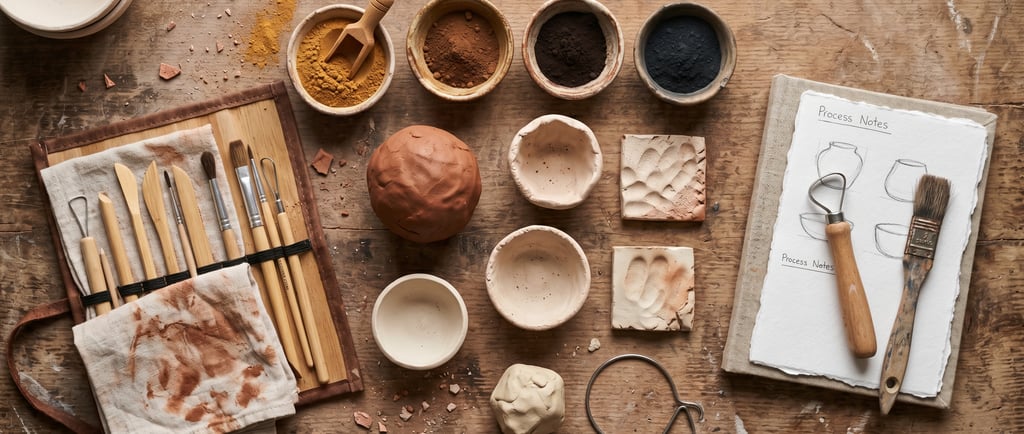
When you open a fine dining restaurant, every decision is deliberate. The lighting, the music, the spacing between tables. Yet tableware — the one thing a guest touches, holds and stares at for the entire meal — is often chosen last, or worse, treated as a commodity order from a catering catalogue.
This guide exists to change that. Whether you are opening your first restaurant or upgrading an existing concept, here is exactly what to look for when sourcing handcrafted tableware that earns its place on your table.
Durability Is Not the Opposite of Delicacy
The first objection we hear from restaurateurs considering handcrafted tableware is: will it survive a professional kitchen? The answer, when the piece is made correctly, is yes — decisively.
At Annamis, our core Circle, Square and Triangle collections are produced using a double-firing process. The piece is fired twice in the kiln: once to harden the clay body, and again after glazing. This creates a denser, more vitrified ceramic that resists chipping, thermal shock, and the relentless cycle of dishwasher heat that mass-produced pieces rarely survive beyond a season.
When evaluating any handcrafted tableware supplier, ask about their firing process. Single-fire pieces can look beautiful on day one but deteriorate quickly in high-volume service.
Slight Variation Is a Feature, Not a Flaw
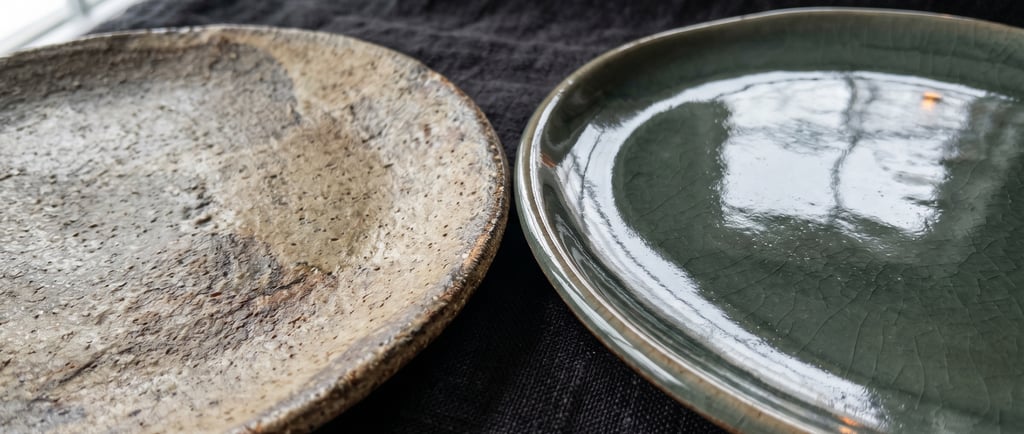
Every piece that leaves our Vietnamese craft partners carries subtle differences — a glaze that pooled differently in one corner, a texture that caught the kiln heat at a unique angle. For chefs trained in European kitchens, this can initially feel uncomfortable.
But consider what those variations communicate to your guest: this was made by a person, not a machine. In a market saturated with identical white hotel china, handcrafted variation signals premium without requiring a word of explanation.
The practical guideline: look for variation within a controlled range. A piece should be recognisably part of the same family — same weight, same glaze colour family, same form — while carrying its individual character. This is the difference between artisanal production and inconsistent quality control.
Weight and Balance Affect Perceived Value
Pick up a handcrafted porcelain dinner plate and a mass-produced equivalent of the same size. The difference is immediate. Handcrafted porcelain — particularly from Vietnamese craft villages with centuries of refining clay body compositions — carries a satisfying density that communicates quality the moment it leaves the kitchen.
For front-of-house staff, a well-balanced plate is also practical. Heavier does not mean harder to carry — balance matters more than weight. A piece that sits level and secure on the palm reduces accidents and instils confidence in service.
Glaze Finish Determines Food Compatibility
Not all glazes are created equal. A matte glaze that photographs beautifully may show every watermark in a dining room with directional lighting. A highly glossy glaze amplifies colour contrast but can look clinical in a warm, intimate setting.
At Annamis, we develop our glazes in collaboration with our craft partners to meet the specific demands of restaurant environments: food-safe certification, resistance to cutlery marking, and a finish that holds its character after hundreds of wash cycles. When selecting tableware, ask for a sample set — run it through your actual dishwasher cycle ten times before committing to a full order.
Sourcing Origin Matters More Than Ever
Today's restaurant guests are increasingly curious about where things come from — including what their food is served on. A piece produced in Vietnam's historic ceramic craft villages, where the tradition stretches back over a millennium, carries a story that belongs on your menu or in your front-of-house training.
Annamis takes its name from Annam — the ancient name for Vietnam — and every piece we produce connects a modern restaurant table to that living tradition. Chef Matt, our founder and a European-trained chef, built Annamis specifically to bridge these two worlds: the rigour of fine dining operations and the irreplaceable warmth of artisanal craft.
Think in Systems, Not Individual Pieces
The most common buying mistake is falling in love with one hero plate and ordering it in isolation. A cohesive table requires a system: dinner plates, side plates, bowls, ramekins, cups — all speaking the same visual language.
Our collection structure at Annamis is designed around exactly this principle. Each selection (Circle, Square, Triangle, Diamond) is a complete system. You can mix selections for visual contrast, but every piece within a selection shares glaze family, weight range and aesthetic intention, making tablescaping intuitive rather than a guessing game.
FAQ
Q: Is handcrafted tableware dishwasher safe?
A: Yes, when produced using a proper double-firing process and food-safe glazes. Always ask your supplier for their specific dishwasher recommendations. Annamis pieces are tested for commercial dishwasher use.
Q: How do I handle slight size variations in handcrafted pieces?
A: Design your plating around the centre of the piece rather than the edge. Most chefs find a 2–3% variation in diameter irrelevant once plating technique is adjusted. The visual benefit far outweighs the minor operational adjustment.
Q: How many pieces should I order as a starting quantity?
A: A general rule is 3x your cover count per item category. This accounts for pieces in service, in the dishwasher, and in breakage reserve. Request samples first — always.
Q: Can I get custom glazes or shapes?
A: Annamis offers studio consultation for bespoke requirements. Contact us to discuss your concept and we will advise on feasibility and minimum order quantities.
Q: What is the lead time for a full restaurant order?
A: Production timelines vary by quantity and customisation. Standard collections typically ship within 8–12 weeks. Contact us early in your fit-out timeline.
→ Request your sample set at annamis.com/for-restaurants
Terms & Conditions
Privacy Policy


© 2024 ANNAMIS LTD. UK Company Number 15690972
9-11 New Broadway, London, W5 5AW, UK.
© 2025 DAC GLOBAL SZOO. PL. NIP 5342704617.
Gruntowa 3a, Wolica, Poland, 05-830.
All rights reserved.
Site created using Hostinger.com
Telephone: +44 7858221374 / +48 739440679
Email: info@annamis.com
United Kingdom - European Union - Vietnam