
Square vs Round Plates for Restaurants: Which Works Better?
RESTAURANT OPERATIONS & TABLE SETTING — PRACTICAL GUIDES
Diego Acevedo
6/8/20264 min read
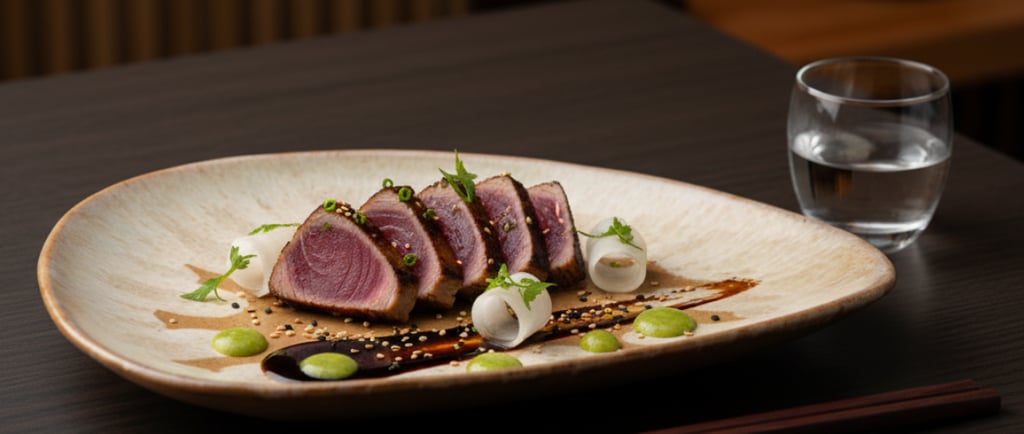
There is a version of the conversation about tableware that treats it as separate from the food. The dish is the chef's work; the plate is the container. This distinction is convenient but incorrect, and it is increasingly contradicted by both research and the practice of the restaurants doing the most interesting work in fine dining today.
Tableware is not neutral. The shape of the plate, the colour of the glaze, the weight of the piece, the texture of its surface — all of these affect how food tastes to the guest. Not metaphorically. Physically.
The Research Is Clear
Experimental psychology has been examining the relationship between tableware and taste perception for over two decades. The findings are consistent enough to have moved from academic papers into the working knowledge of serious chefs. Some of what the research shows:
Heavier plates are associated with more intense flavour perception. Guests rating food from heavier plates consistently score the same food higher than when it is served on lighter alternatives. The mechanism appears to involve the heuristic that weight signals quality — a deeply embedded association that operates below conscious awareness.
Round plates enhance the perception of sweetness; angular plates enhance bitterness and intensity. This is not universal across all studies, but the directional finding is robust enough that chefs who design dessert courses have found value in moving toward rounder, softer-edged forms.
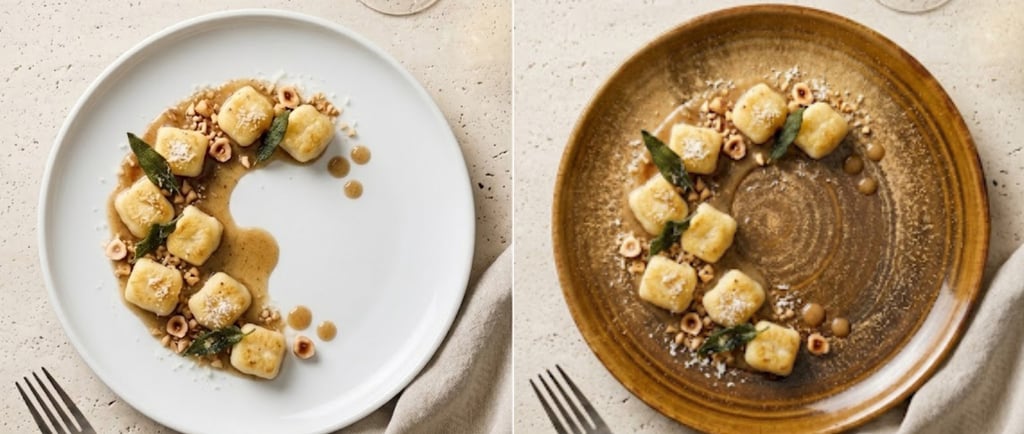
Colour contrast between plate and food increases perceived flavour intensity. A strawberry mousse on a white plate looks and tastes different from the same mousse on a dark charcoal surface. The darker surface increases the visual contrast, and the brain's interpretation of that contrast feeds into flavour perception.
Translating Research Into Purchasing Decisions
The practical implication is not that you need to overhaul your entire tableware collection in response to every study published in the Journal of Sensory Studies. It is that tableware selection is a culinary decision, not a procurement one — and should be made by the same person responsible for the food.
When Chef Matt founded Annamis, this was a central principle. He designed the collection architecture with a chef's understanding of how a plate behaves as a compositional element: the way an earth-toned glaze integrates visually with food rather than competing with it, how the organic rim of a Circle selection plate provides a natural framing device for central plating, how the clean geometric edge of a Square piece gives a chef a precise canvas for linear presentations.
Colour: The Most Immediate Decision
Of all the tableware variables, colour has the most immediate and legible impact on food presentation. The conventions of restaurant tableware have long defaulted to white for a reason: white provides the highest contrast with most food colours, making plating decisions read clearly. It is a safe choice.
But safe is not the same as optimal. An earth-toned plate — warm cream, sage, terracotta, charcoal — creates a different relationship with food: less clinical, more evocative. The plate becomes part of a mood rather than a neutral background. This is why the shift away from all-white tableware in serious restaurants over the past decade is not mere fashion — it reflects chefs understanding that the plate is part of the dish.
The practical guidance: consider your menu palette. A predominantly green vegetable menu may sing on a cream or warm stone surface. A seared fish concept may benefit from the contrast of a deep blue or charcoal glaze. A dessert course almost always benefits from surface warmth.
Weight and Texture: The Tactile Dimension
Every guest holds the tableware. They may not consciously register the weight of the plate when it is placed before them, but their hands do — and that tactile information feeds into their overall quality perception. Handcrafted double-fired porcelain carries a density that communicates substance in a way that lightweight mass-produced china cannot replicate.
Texture operates similarly. A surface with visible throwing marks or a glaze with depth and variation engages the guest's attention at close range — the range at which they are actually examining what is in front of them. The plate becomes worth looking at, not just looking past.
FAQ
Q: Is there scientific evidence that plate choice affects how food tastes?
A: Yes. Research by Professor Charles Spence at Oxford's Crossmodal Research Laboratory and others has consistently demonstrated that plate weight, colour, shape, and texture affect flavour perception. The findings have been widely adopted by leading chefs.
Q: Should my tableware match my interior design?
A: Cohesion matters more than matching. Tableware that shares a tonal and aesthetic relationship with your interior creates a unified experience; tableware that clashes creates dissonance. Annamis pieces span a range of palettes that can be selected to complement different interior contexts.
Q: How do I test tableware choices before committing to a full order?
A: Request a sample set and plate your actual dishes on the pieces in your real kitchen lighting. Photograph the results. What looks right in a showroom may look different under your restaurant lighting conditions.
Q: Can Annamis advise on collection selection for my specific cuisine?
A: Yes. Contact us with your menu direction and concept brief. We are happy to recommend collections based on cuisine, plating style, and the atmospheric context of your restaurant.
→ Request your sample set at annamis.com/for-restaurants
Terms & Conditions
Privacy Policy


© 2024 ANNAMIS LTD. UK Company Number 15690972
9-11 New Broadway, London, W5 5AW, UK.
© 2025 DAC GLOBAL SZOO. PL. NIP 5342704617.
Gruntowa 3a, Wolica, Poland, 05-830.
All rights reserved.
Site created using Hostinger.com
Telephone: +44 7858221374 / +48 739440679
Email: info@annamis.com
United Kingdom - European Union - Vietnam