
Restaurant Tableware Trends for 2025: What Top Chefs Are Putting on Their Tables
TREND & INSPIRATION — DISCOVERY CONTENT
Diego Acevedo
4/30/20264 min read
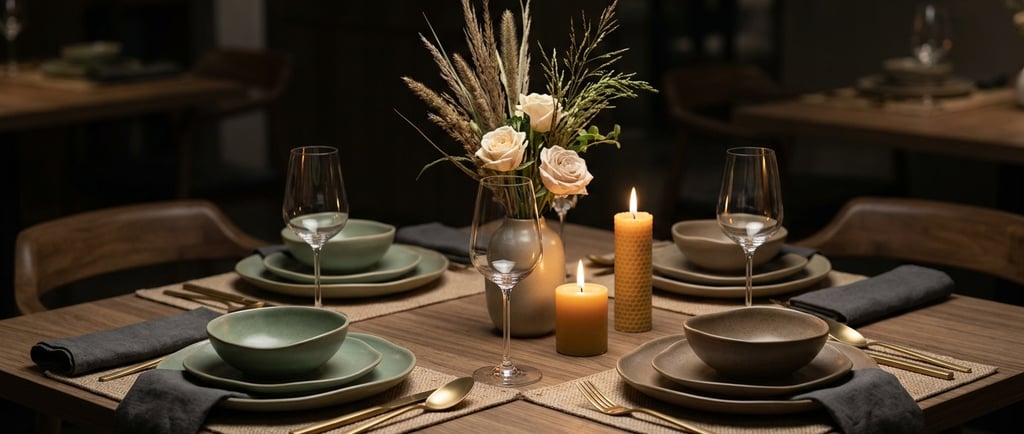
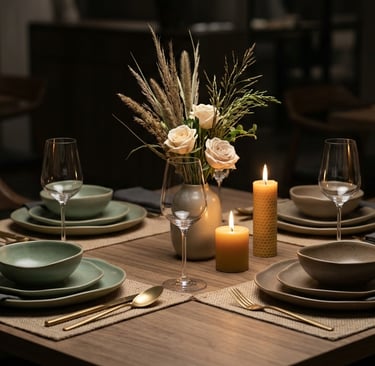
Tableware trends in fine dining move more slowly than food trends — a deliberate choice by chefs who understand that a table setting needs to work across menus, seasons, and years. But 2025 has brought a clear shift in what restaurateurs are specifying, and understanding it helps you make purchasing decisions that will still feel right in 2028.
Earth Tones Are Replacing All-White
The decade-long dominance of bright white hotel china is giving way to a warmer, more textured palette. Restaurateurs are specifying pieces in warm cream, stone, terracotta, sage, and charcoal — colours that photograph better in the warm light of a modern dining room and feel more considered than clinical white.
This shift plays directly to the strengths of handcrafted tableware. Natural clay bodies and wood-fired or reactive glazes produce exactly the kind of warm, slightly variable tones that designers and chefs are now actively seeking. A glaze that pools to a slightly darker tone at the base of a bowl is an asset in 2025, not a quality control problem.
All four Annamis collections — Circle, Square, Triangle, and Diamond — are developed with this palette in mind. Our glazes respond to the kiln in ways that produce depth and warmth rather than flat uniformity.
Geometric Form Is Having a Moment
The round plate remains the workhouse of restaurant service, but geometric forms — square, rectangular, triangular — are increasingly appearing as accent pieces, sharing a table setting with circular foundations to create visual rhythm.
The practical application: a circular dinner plate paired with a square side plate and a triangular amuse-bouche vessel creates a table that tells a visual story before the food arrives. This is the principle behind our collection architecture at Annamis — each geometric selection can stand alone or be mixed with intention.
Texture Is the New Minimalism
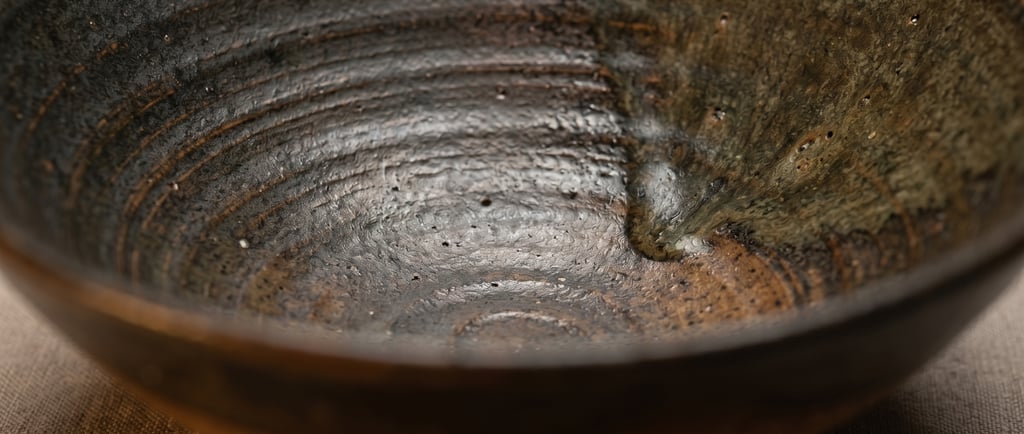
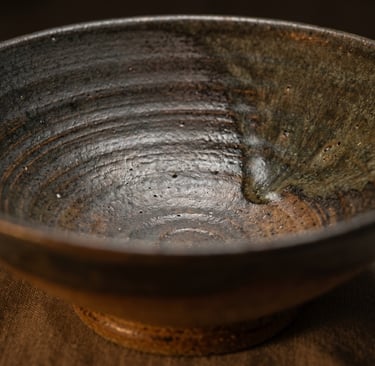
In the early 2010s, minimalism in tableware meant smooth, matte, and featureless. In 2025, minimalism means restraint of colour combined with richness of texture. Ribbed surfaces, deliberate throwing marks, and varied glaze thickness are the details that make a piece interesting at close range — exactly the range at which a dining guest examines what is in front of them.
This is an area where handcrafted tableware has an insurmountable advantage. Machine-made pieces can simulate texture, but the result reads as decoration applied to a surface. Handcrafted texture is structural — it is in the piece, not on it.
Provenance Is Becoming a Table Conversation
In 2019, few restaurants talked about where their plates came from. In 2025, the most forward-thinking operators are including tableware provenance in staff training, menu footnotes, and even as a feature in pre-meal guest communications.
The logic follows the trajectory of food provenance: if guests care that their beef is from a specific farm and their wine from a particular hillside, they are increasingly interested in the story of what holds both. A piece made in a Vietnamese craft village with a thousand-year tradition is a story worth one sentence on a menu.
Sustainability Specifications Are Going Upstream
Hotel groups, restaurant chains, and corporate dining operators are increasingly including sustainability criteria in their tableware procurement specifications — not as a preference, but as a supplier requirement. This is filtering into independent fine dining as well, where owners are anticipating guest expectations rather than reacting to them.
Durability, repairability (in the sense of being replaceable from the same production run), and ethical supply chains are the criteria most commonly specified. Handcrafted tableware from established craft communities scores well on all three — and the transparency of a direct relationship with producers makes verification straightforward.
How to Apply These Trends Without Chasing Them
The best tableware purchasing decision is one that builds on enduring quality while aligning with contemporary taste. Chasing the leading edge of trend in tableware — as in interiors — leads to expensive rethinks every three years.
The practical filter: choose pieces that would have looked at home in the best restaurants of 2018, look right in 2025, and will still feel considered in 2030. Earth tones, quality craft, geometric variety, and visible texture all pass that test. Novelty glazes and heavily branded 'statement' pieces do not.
FAQ
Q: How often should a restaurant update its tableware?
A: For core pieces, think in terms of replacement rather than update — 5 to 7 years for a quality handcrafted set. Accent pieces and seasonal specials can evolve more frequently without disrupting the overall investment.
Q: Can I mix collections from different Annamis selections?
A: Yes, and we encourage it. Each selection shares a glaze family and aesthetic intention that allows mixing with visual coherence. We can advise on combinations for your specific concept.
Q: Are earth tone glazes practical in a busy restaurant?
A: Yes. Our earth tone glazes are developed for restaurant environments — food-safe, cutlery-mark resistant, and designed to look better rather than worse with age and use.
Q: How do I stay current with tableware trends without over-investing?
A: Build your core collection on enduring quality (shape, weight, glaze durability) and introduce trend-adjacent pieces — a new bowl shape or accent colour — through small seasonal additions rather than wholesale replacement.
Q: Does Annamis release new collections regularly?
A: Yes. We add to our Newly Launched range periodically while maintaining the core collections that our restaurant customers rely on for continuity. Sign up for our updates to be notified first.
→ Request your sample set at annamis.com/for-restaurants
Terms & Conditions
Privacy Policy


© 2024 ANNAMIS LTD. UK Company Number 15690972
9-11 New Broadway, London, W5 5AW, UK.
© 2025 DAC GLOBAL SZOO. PL. NIP 5342704617.
Gruntowa 3a, Wolica, Poland, 05-830.
All rights reserved.
Site created using Hostinger.com
Telephone: +44 7858221374 / +48 739440679
Email: info@annamis.com
United Kingdom - European Union - Vietnam