
Ramekins in a Professional Kitchen: Uses, Sizes and What Chefs Actually Need
RESTAURANT OPERATIONS & TABLE SETTING — PRACTICAL GUIDES
Diego Acevedo
6/15/20264 min read
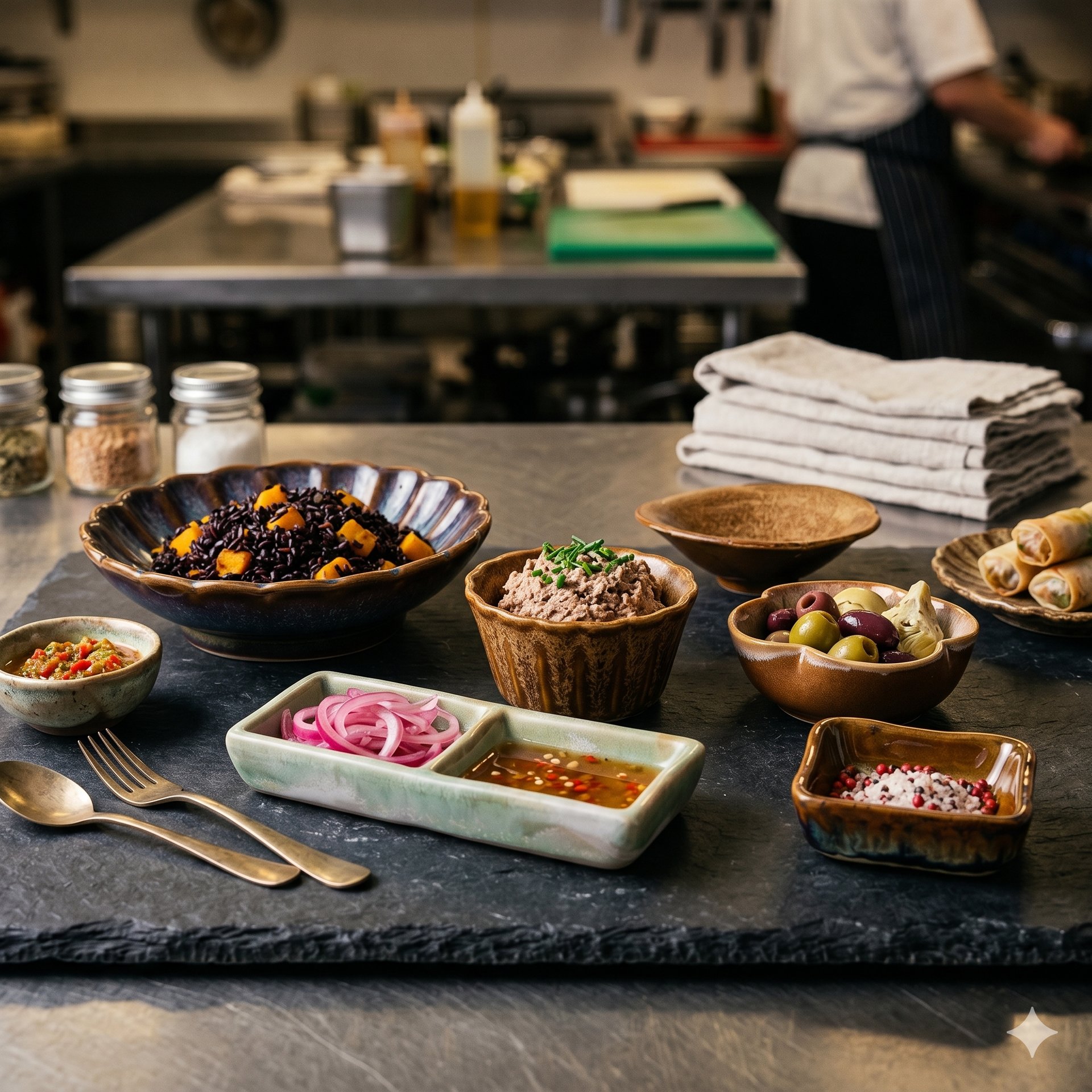
Ramekins occupy an unusual position in the professional kitchen: essential, ubiquitous, perpetually under-specified. Most restaurants order them as an afterthought — a standard white ceramic cup in whatever size is listed under 'ramekin' in the catering catalogue — and then spend years adapting their service to work around a piece that was never quite right for the job.
This guide approaches ramekins as the precision tools they are. Specifying the right size, shape, and material for each ramekin's intended use makes service faster, presentations more consistent, and the table more coherent.
What Is a Ramekin For? The Actual Question
The word 'ramekin' covers an unhelpfully wide range of vessels in professional kitchen use. In practice, the ramekins and small side dishes used in a fine dining restaurant serve at least six distinct functions — and each function benefits from a different specification.
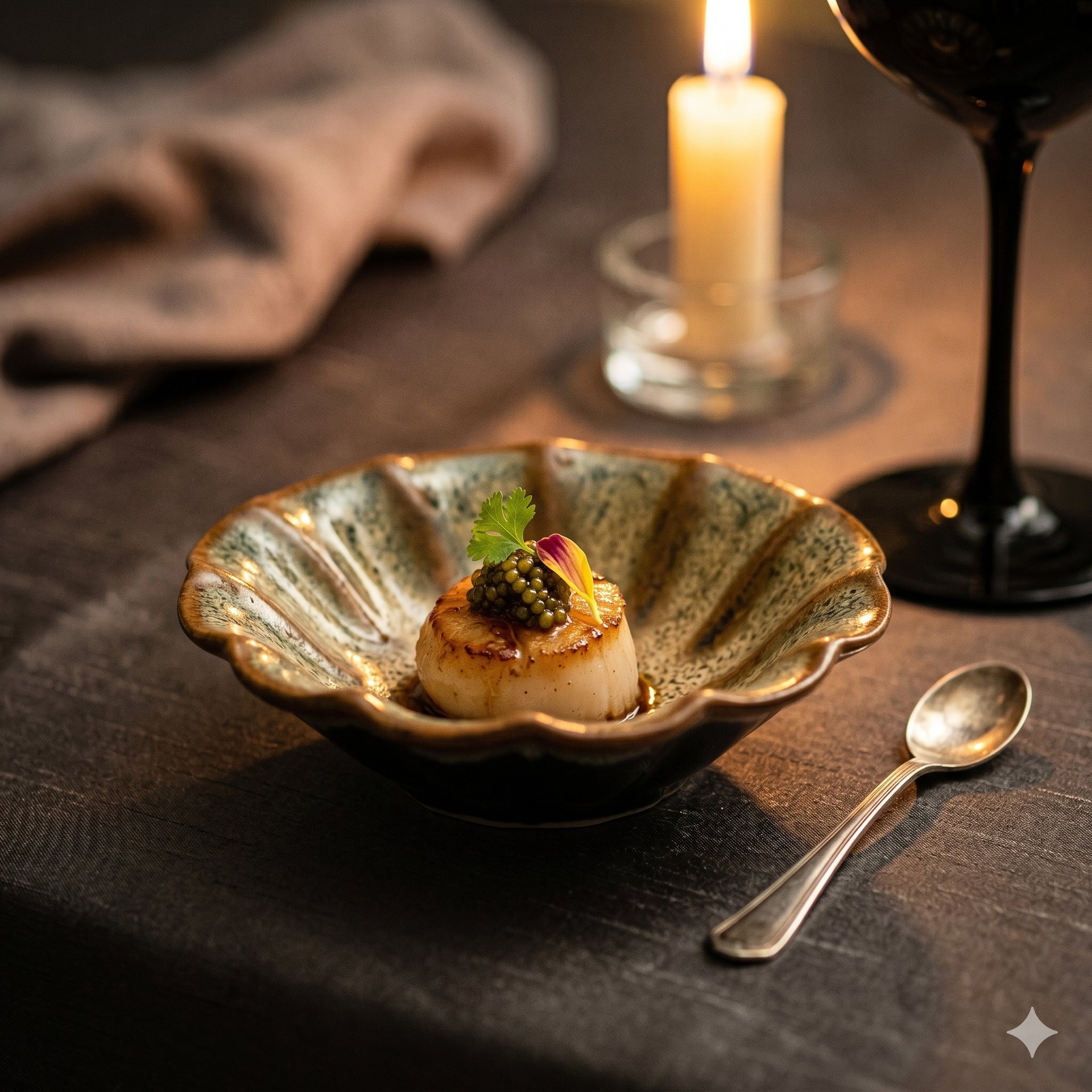
Amuse-bouche presentation. The tiniest vessels in this category — 40–60ml capacity — are used for single-bite presentations of liquid or semi-liquid preparations: a jellied consommé, a small warm soup, a textured cream. These pieces need to be small enough to hold in one hand comfortably and deep enough to contain a liquid without risk of spilling in service.
Sauce and condiment vessels. The most common ramekin use in service: small, open-top dishes holding sauces, flavoured butters, aioli, or other condiments that accompany a main course. Here, 60–80ml, wide-mouth pieces work best — the guest needs to be able to access the contents easily without the depth of the vessel becoming an obstacle.
Pre-dessert or intermezzo. A small, elegant vessel for single-service presentations — a sorbet, a foam, a palate cleanser. The aesthetic of this vessel matters significantly, as it often arrives with ceremony between courses.
Side dishes for sharing service. Larger, bowl-like ramekins — 150–200ml — used to present shared sides: whipped butter, bread accompaniments, pickles. These pieces are on the table for longer and need to withstand handling by multiple guests.
Mise en place and prep. The kitchen use of ramekins — for portioned ingredients, sauces, and garnishes — is entirely separate from their service use. Most kitchens maintain a dedicated stock of simple, stackable prep ramekins that never appear in the dining room.
Baked dishes. Crème brûlée, individual gratins, baked egg preparations. For these applications, material and thermal properties are the primary specification — the piece goes into the oven and arrives at the table, so it must tolerate that transition reliably.
Sizing Guide for Service
40–60ml: Amuse-bouche, small liquid presentations, single-bite service.
60–90ml: Sauce and condiment dishes, small dipping vessels, intermezzo presentations.
90–150ml: Pre-dessert service, individual appetiser presentations, small sharing condiment dishes.
150–250ml: Sharing side dishes, bread and butter service, larger amuse-bouche presentations for multiple guests.
250ml+: Individual baked preparations, soup service in a ramekin format, substantial shared sides.
Material Considerations
For service ramekins in a fine dining context, the same material considerations that apply to plates apply here: vitrified porcelain performs better under repeated commercial dishwasher cycling than non-vitrified alternatives. Glaze stability matters — a ramekin that develops crazed glaze after six months of daily washing is a hygiene concern as well as an aesthetic one.
For baked preparations specifically: confirm that your pieces are oven-safe to the temperatures you require, and test thermal shock resistance (taking a piece from refrigerator temperature directly into a hot oven) before committing to a full order.
Annamis ramekins and side dishes are available across all four selections and are designed to be ordered as part of a cohesive table system — not as isolated pieces. A ramekin from the Circle selection carries the same glaze family as the dinner plate from the same collection, creating visual coherence even in the smallest details of your table.
Ordering Quantities
The 3x cover rule applies here with modification: for sauce ramekins used on every main course, order 3–3.5x your cover count. For amuse-bouche vessels used only in specific service formats, 2x may be sufficient. For baked preparation ramekins, consider the volume of those preparations in your service and build a reserve that accounts for oven-to-table attrition.
Ramekins have a notably higher replacement rate than larger pieces — their small size makes them more susceptible to careless handling. Budget for annual replacement of approximately 20% of your ramekin stock.
FAQ
Q: Are Annamis ramekins oven safe?
A: Yes. All Annamis pieces are rated for microwave use. For conventional oven use, contact us with your specific temperature requirements and we will advise on the appropriate pieces from our range.
Q: Can I match ramekins exactly to my dinner plate collection?
A: Yes. Our ramekins and side dishes are developed within each collection's glaze family. A ramekin from Harvest Sun, for example, shares the glaze palette and aesthetic intention of the Harvest Sun plates.
Q: What is the minimum order for ramekins?
A: Minimums vary by piece. Contact us directly — we can advise on the most practical approach to incorporating ramekins into an existing or new Annamis order.
Q: How do I present a ramekin elegantly in service?
A: Place ramekins on a small plate or slate with a folded napkin or a garnish element to anchor them visually. A ramekin placed directly on a bare table can look underdressed; it benefits from a base element.
→ Request your sample set at annamis.com/for-restaurants
Terms & Conditions
Privacy Policy


© 2024 ANNAMIS LTD. UK Company Number 15690972
9-11 New Broadway, London, W5 5AW, UK.
© 2025 DAC GLOBAL SZOO. PL. NIP 5342704617.
Gruntowa 3a, Wolica, Poland, 05-830.
All rights reserved.
Site created using Hostinger.com
Telephone: +44 7858221374 / +48 739440679
Email: info@annamis.com
United Kingdom - European Union - Vietnam