
Inside the Craft Villages That Make Annamis Tableware
VIETNAMESE CRAFT & ORIGIN STORY — BRAND AUTHORITY
Diego Acevedo
5/11/20263 min read
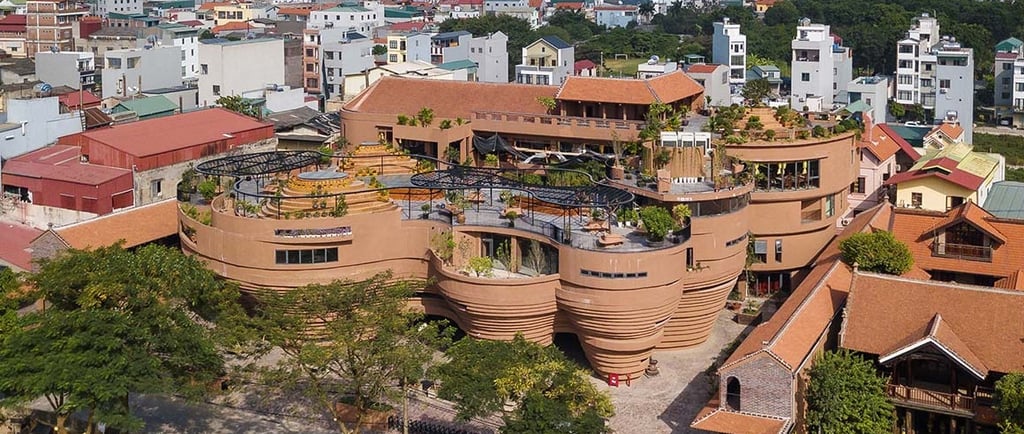
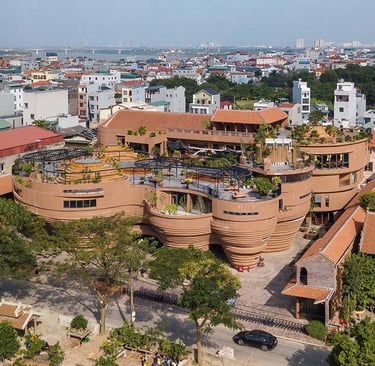
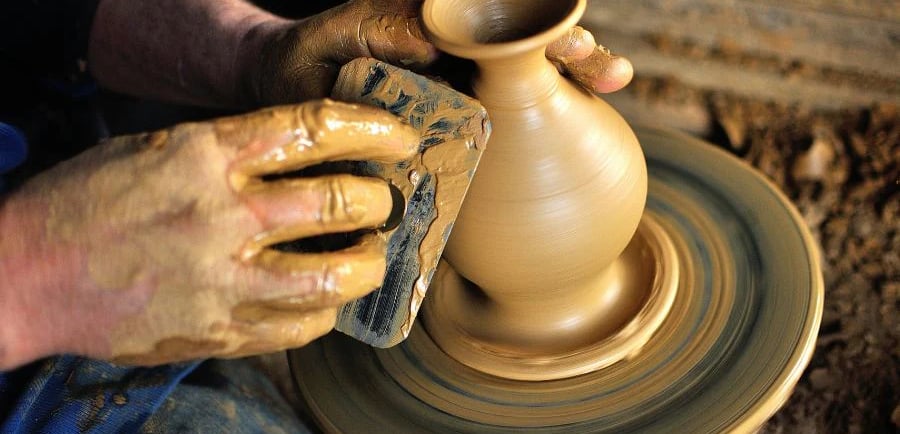
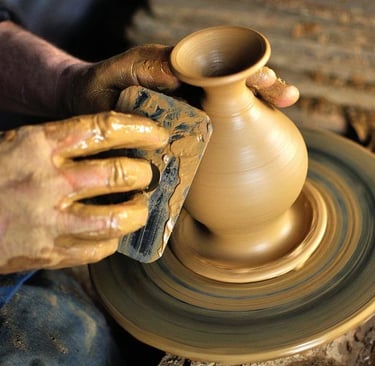
Every Annamis piece begins the same way: a person's hands pressing into clay. Not a mould. Not a die-press machine calibrated to micrometre tolerances. A person, working in a northern Vietnamese craft village, shaping a piece that will eventually travel to a restaurant kitchen in London, Berlin, or Warsaw.
This is not a romanticised account of production. It is a precise description of how our tableware is actually made — and understanding the detail of that process changes how you see the finished piece on your table.
Where the Craft Begins
The ceramic villages of northern Vietnam have been producing pottery continuously for over six hundred years. The geography is not accidental: the region sits above deposits of fine-grained kaolin clay, the same mineral composition that makes Vietnamese porcelain prized for its naturally white, dense body after firing.
What distinguishes these villages from industrial ceramic facilities is not nostalgia. It is the depth of accumulated knowledge — knowledge that lives in the hands of the people working there, transmitted informally through observation and practice over generations. The right way to wedge a particular clay body to remove air pockets. The angle at which a trimming tool removes excess without compromising wall thickness. The temperature gradient inside a specific kiln that produces a particular glaze colour. This knowledge is not written down. It is embodied.
The Production Process, Honestly Described
A piece of Annamis tableware begins as raw clay, sourced from the local region. The clay is prepared — wedged, tested for consistency, rested — before a craftsperson begins forming. Plates and flat forms are predominantly wheel-thrown or jigger-moulded depending on the collection; bowls are wheel-thrown by hand.
After forming, pieces are air-dried slowly to prevent cracking. This stage requires patience that industrial production cannot accommodate: rush the drying and the piece warps or cracks before it even reaches the kiln. In the craft village model, pieces sit for days, sometimes longer, depending on weather and humidity.
Our Circle, Square, and Triangle collections then undergo double-firing. The first fire — the bisque — hardens the clay body. The piece is then glazed by hand and returned to the kiln for the second fire, which fuses the glaze to the body, creating the dense, vitrified surface that makes Annamis pieces resistant to the demands of professional kitchen use.
What Variation Means in Practice
If you have handled Annamis pieces, you will have noticed that no two are identical. This is not a quality control failure — it is a production reality that we consider a feature of genuine craft work. Glazes pool differently depending on how a piece sits in the kiln. Throwing marks are subtly present on pieces where we have chosen not to smooth them away. Rim profiles carry slight variations that machine production would eliminate.
For a restaurant chef, this variation has a practical implication: each piece is slightly individual. Two plates of the same diameter may carry their glaze colour differently. The practical response is to design plating around the centre of the piece rather than its edge — which is, in our experience, how the best chefs approach plating regardless of tableware choice.
The guest-facing implication is more straightforward: a handcrafted piece communicates its own story before the food arrives. It has presence that mass-produced equivalents do not.
A Supply Chain Worth Understanding
Annamis works directly with craft partners rather than through intermediary trading houses. This is a deliberate choice with commercial and ethical dimensions. Commercially, it means we have direct visibility of production quality, lead times, and capacity. Ethically, it means the economic value of the transaction flows to the people doing the work.
Our craft partners are not anonymous factories. They are extended family operations with their own production standards and pride in their work. When Chef Matt and Phuong established the production relationships that underpin Annamis, they did so with long-term continuity as the objective — not the cheapest available price per piece.
That decision is reflected in the finished product. And it is part of the story you are bringing to your restaurant table.
FAQ
Q: Can I visit the craft villages as part of our supplier relationship?
A: We welcome partner visits to our production facilities for established clients. Contact us to discuss.
Q: How do you maintain quality consistency across handcrafted production?
A: We work with our craft partners on written quality specifications, conduct pre-shipment inspections for every order, and have built long-term relationships that allow us to raise and resolve issues quickly.
Q: Does the handcrafted process affect lead times?
A: Yes. Our standard lead time is 8–12 weeks for current collections. We factor this into our production scheduling and communicate timelines clearly at the point of order.
Q: Can I request production visits or documentation for my sustainability reporting?
A: Yes. We provide origin documentation and supply chain transparency materials for customers with sustainability reporting requirements.
→ Request your sample set at annamis.com/for-restaurants
Terms & Conditions
Privacy Policy


© 2024 ANNAMIS LTD. UK Company Number 15690972
9-11 New Broadway, London, W5 5AW, UK.
© 2025 DAC GLOBAL SZOO. PL. NIP 5342704617.
Gruntowa 3a, Wolica, Poland, 05-830.
All rights reserved.
Site created using Hostinger.com
Telephone: +44 7858221374 / +48 739440679
Email: info@annamis.com
United Kingdom - European Union - Vietnam